Explainer
Why is Imperial Beach still closed?
Imperial Beach's water stays closed for two separate reasons: Tijuana River storm flows, and untreated sewage from Punta Bandera five miles south.
Get monthly updates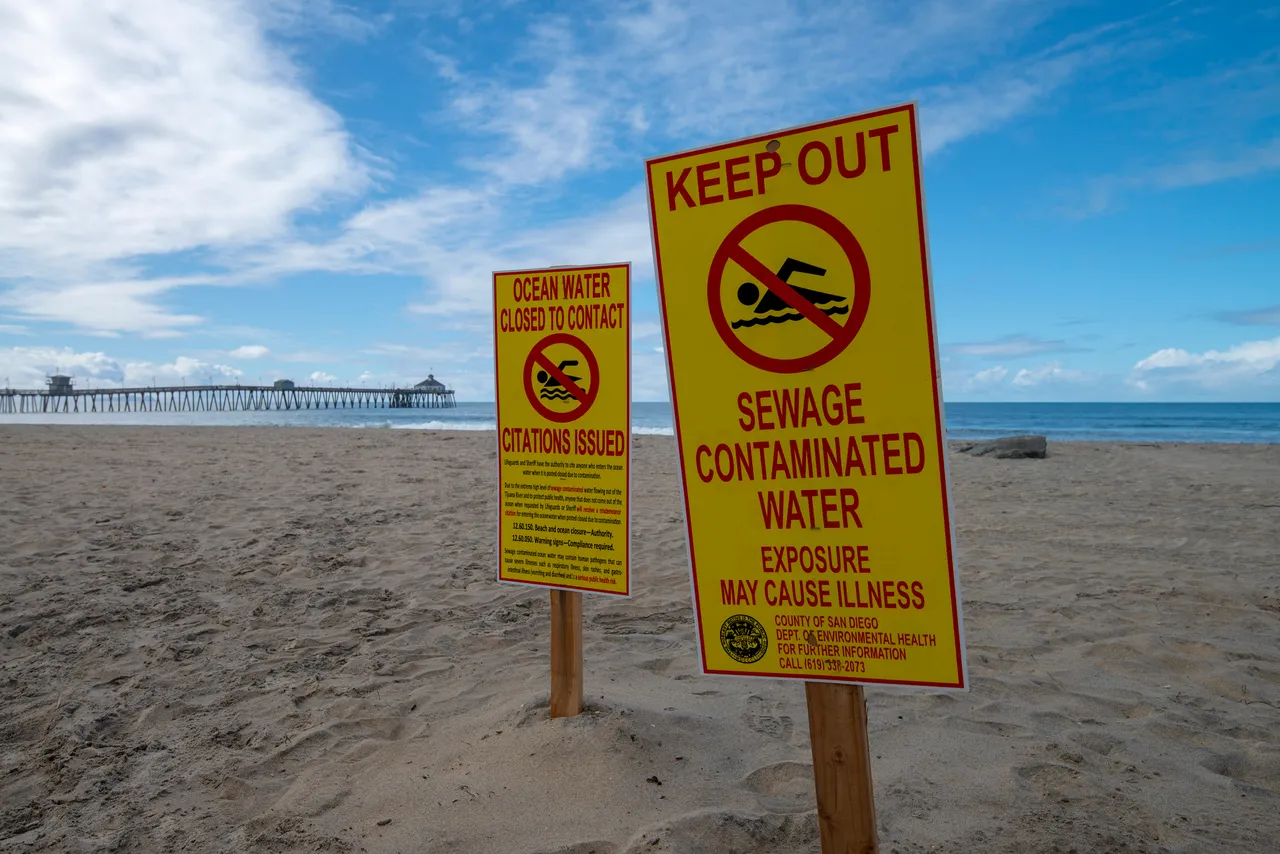
- Imperial Beach's water has been under a swimming closure for most of the past several years, because of sewage from two separate sources.
- Sewage arrives by two routes: down the Tijuana River in storms, and north along the coast from a treatment plant in Mexico, Punta Bandera, in dry months.
- Modeling by the Scripps Institution of Oceanography, published by the EPA, found Punta Bandera is the main cause of dry-season closures.1
- In storms, an average of about 109 million gallons a day of sewage-contaminated water crosses the border untreated.2
- Most funded construction finishes between 2027 and 2031, and it mostly addresses dry-weather flows and plant capacity — not the two problems that keep the beach closed.
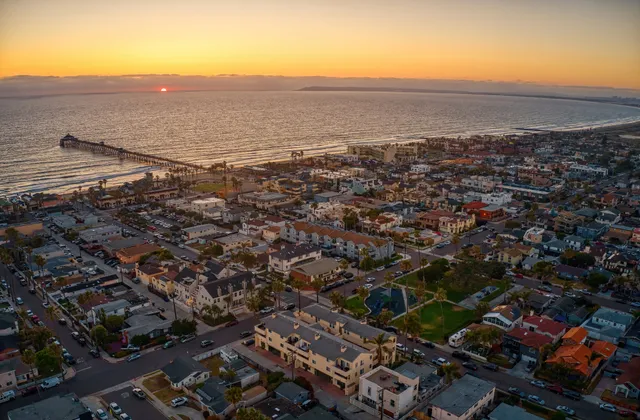
The sand is open. The water has been closed to swimming for most of the past several years. Two separate failures keep it that way, on two different schedules, about five miles apart.
Why the water is closed
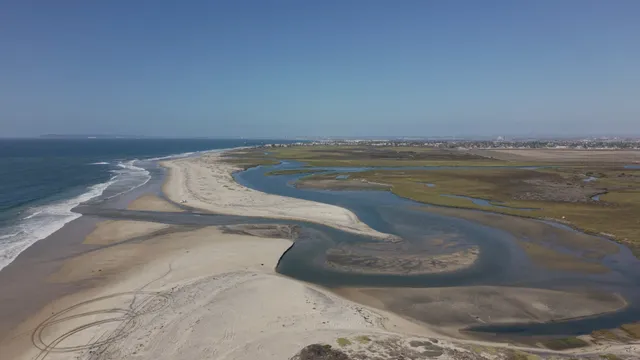
Most coverage of the closures focuses on the Tijuana River, which is the main cause in January but not in July. The river is the storm-season problem. The dry-season problem is a treatment plant in Mexico a few miles south of the border.
The San Antonio de los Buenos plant at Punta Bandera receives roughly twice the sewage it can treat. It treats about 18 million gallons a day, and discharges the rest, untreated, onto the shoreline. Ocean currents carry it north.3
Scripps researchers modeled which sources drive the closures here. In dry months, Punta Bandera is the main one. In the rainy season, the modeling attributes about two-thirds of closure-causing pollution to the river and about one-third to Punta Bandera.1
How long it has been closed
There is no single agreed count, because outlets track different windows and different thresholds for what counts as a closure. The numbers that exist point the same way.
Two counts give the shape of it. In July 2025, KPBS reported county figures of 861 closure days since the start of 2023 — more than 90% of the days in that stretch.4 And in October 2024, Surfline reported that the southernmost stretch of shoreline, near the Tijuana Slough, had been closed for more than 1,000 days without a break.5
Those two numbers are not measuring the same thing: the first is days closed across Imperial Beach, the second is an unbroken run at the south end nearest the river. Both are now out of date, and both point the same way. The beach spends more days closed than open, and has for years. Storms drive the winter closures; the Punta Bandera plume drives the summer ones.
Where the water comes from
Four places discharge into the ocean off Imperial Beach. Three carry untreated sewage. The fourth, the South Bay Ocean Outfall, carries treated wastewater about 3.5 miles offshore.
| Source | Dry season | Storm | What it carries |
|---|---|---|---|
| Border canyonsGoat Canyon and Smuggler’s Gulch into the estuary | ~0.5 MGD† | ~8 MGD† | Raw sewage, Trash, Sediment |
| South Bay Ocean OutfallAbout 3.5 miles offshore | ~35 MGD | ~38 MGD† | Treated wastewater from the South Bay plant and a City of San Diego reclamation plant |
| Punta Bandera shorelineMexico, about 5 miles south of the border | ~18 MGD | ~22 MGD† | Raw sewage, Partly treated sewage, Industrial chemicals |
| Tijuana River mouthEstuary, south end of Imperial Beach | ~1 MGD† | ~109 MGD (2015–2019 avg.) | Raw sewage, Industrial chemicals, Trash, Sediment |
MGD means million gallons per day. These are approximate averages; real flows vary a lot from day to day and storm to storm. Values marked † are our own rough estimates rather than official figures.
Why storms make it worse
Just before the border, a Mexican pump station called PB-CILA pulls water out of the river channel. When it works, very little sewage crosses in dry weather. That is why summer closures trace back to Punta Bandera rather than the river.
The pumps shut off when river flow rises above about 23 million gallons a day, to protect the equipment from sand and trash. Storms cross that threshold immediately. Individual storms can push the river past a billion gallons a day, roughly ten times the 109 MGD storm average, and the pumps stay off until flows drop back below about 23 MGD, which can take days or longer.2
Canyon collectors fail the same way. Goat Canyon, Smuggler's Gulch and three smaller collectors catch dry-weather flows and pipe them to the South Bay plant. A storm overwhelms them, or a Tijuana pump station fails, and sewage and trash run through the valley to the estuary. How much reaches the ocean that way is poorly documented.
Since October 2018, more than 200 billion gallons of sewage-contaminated water have crossed the border in the river, on International Boundary and Water Commission figures cited by the California State Assembly.6
What the signs on the sand mean
San Diego County sets the status and owns the signage. The statuses are:
- Closure. Sewage-contaminated water is present. Stay out of the water entirely, including surfing, swimming and wading.
- Warning. The water may be affected by sewage, and contact may make you sick.
- Advisory. Bacteria levels are above state health standards.
- Rain advisory. Issued countywide after about a fifth of an inch of rain. Avoid all ocean and bay water for 72 hours after the rain stops. No signs are posted on the sand for this one.
Closures apply to the water. Walking on dry sand is generally allowed. Stay out of the wet sand at the waterline and away from the river mouth.7
Why hundreds of millions of dollars have not reopened it
Money has moved and construction is happening. The South Bay plant is being repaired and expanded, the trash boom north of the border has captured about 2,000 tons of trash and debris over two storm seasons,8 and the county reopened two Imperial Beach areas in September 2026.9
The reason it has not made a measurable difference yet is that the funded work mostly targets dry-weather flows and plant capacity, and most of it finishes between 2027 and 2031. That leaves the two pieces that close the beach.
Storm flows are the first. No existing or funded facility is built to handle 109 million gallons a day, let alone a billion. Punta Bandera is the second: an offshore outfall and a plant expansion have both been studied, and neither is funded.
That is the honest answer after years of attention — the projects that got money are not the projects that fix the two largest sources. The project tracker shows where each one stands, and which have money.
What is in the water, and in the air
It is not only human waste. Researchers have found viruses, antibiotic-resistant bacteria, and hundreds of chemicals including pesticides, solvents and flame retardants. A September 2026 San Diego Coastkeeper report found a steady stream of industrial chemicals, heavy metals and pesticides in the river.10
Scripps research has also shown that bacteria and chemicals from sewage-polluted water become airborne in sea spray and come back onto land.11 Along the river, churning sewage releases hydrogen sulfide, the rotten-egg gas that causes headaches, nausea and eye irritation.
Questions people ask
Is Imperial Beach open? The sand is open, but the water has been closed to swimming for most of the past several years. Check the county's current status before going in.
Can you swim there right now? Not while the county has the water closed. A closure means sewage-contaminated water is known to be present, and contact can cause stomach illness, rashes, and ear, eye and skin infections.
When will it reopen? There is no firm date. Most funded construction finishes between 2027 and 2031, and it targets dry-weather flows and plant capacity. Storm flows and the Punta Bandera plume, which drive most closures, have no funded fix yet.
Is it safe to walk on the beach if the water is closed? Generally, yes. Closures apply to the water itself. Stay off the wet sand at the waterline and away from the river mouth, and follow posted signs.
What to check before you go
The county is the authority on whether the water is closed, and testing lags conditions. Check the county's beach status or its 24-hour hotline on 619-338-2073 before any water contact, and stay out for 72 hours after rain stops.
On this site, Is it safe today? carries the current beach, air, river flow and rainfall readings from the agencies. The project tracker shows where each of the 16 major projects stands, including which have money and which do not. And if you want to do something before the first storms, September and October are the window for valley cleanups that keep trash out of the pumps downstream — Take action lists who is organizing them.
Sources
- U.S. EPA, Beach Impact Comparison Study — the Scripps modeling of beach-closure sources
- U.S. EPA, USMCA Tijuana River watershed — the storm flow average
- Coronado Eagle, Mayor's Corner — Punta Bandera treats about half its inflow, August 2026
- KPBS, 861 closure days since the start of 2023, on county figures, July 2025
- Surfline, more than 1,000 unbroken closure days at the south end, October 2024
- California State Assembly, on 200+ billion gallons since October 2018
- San Diego County, beach and bay status levels and advisory types
- State Water Board, trash boom funding extended, July 2026
- KPBS, county reopens two Imperial Beach areas, September 2026
- KPBS, report finds the Tijuana River chronically polluted with sewage and chemicals, September 2026
- Environmental Science & Technology, bacterial and chemical evidence of coastal water pollution in sea spray aerosol, 2023
Spot a mistake? Send a correction